The main idea of making Idle Island Tycoon was to create an idle game with a small component of survival:
Idle genre – launching an idle during the big wave of idle mobile games, to be a competitor in the market.
Small survival elements – managing a second soft currency (Food) to keep high levels of productions.
Post-apocalyptic theme – A flooded world with small islands to emulate the progress in the game.
Worked hand to hand with a small team, mixed between programmers, artists and marketing responsibles, to ensure a different game inside a big sea of idles.
Overview & Technique Highlights
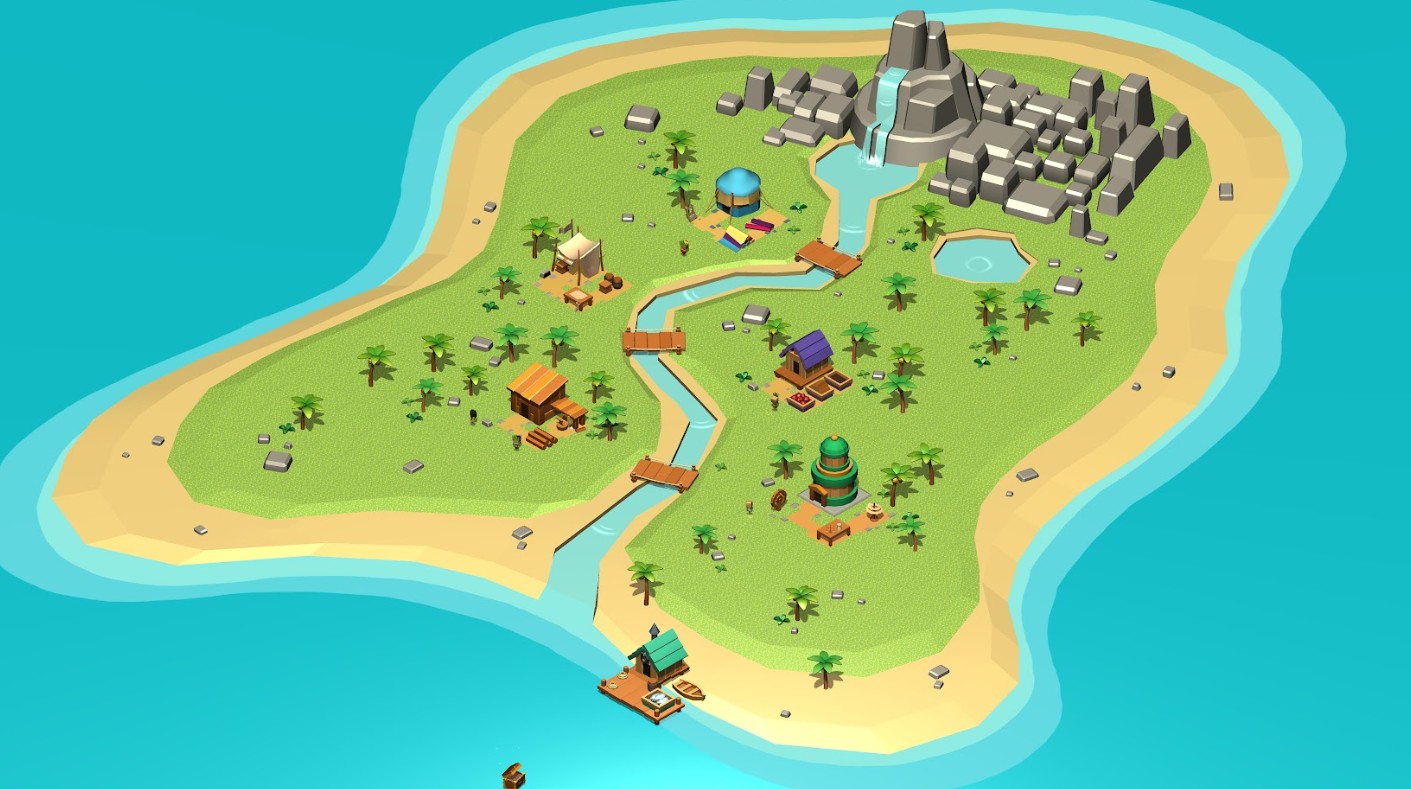
Game Premise: in a flooded world, a small group of survivors reach an island, uninhabited and with materials. They start a new small colony, progressing with the aid of a merchant and a genius, to prosper and reach new lands.
Managing resources and productions, players have to created a solid increasing economy system while keeping an eye on the food requirements of the survivors, to ensure that the production doesn’t go down. Build new resource generators and progress throught different island, each time bigger and more fertile than the previous ones.
Technique Highlight 1: Second soft currency
Visualization of Mechanic
Goal: the objective was to create a system where players will have to manage the food consumption of survivors to increase or decrease the production.
Result: A food gauge based on the general food and material production that allow players to obtain up to 150% extra production.
Techniques
The food management grants a second line of buildings to keep a positive production. If the food is low, the island will produce less resources.
It grants more visual interest, since there are more buildings to construct and it enriches the variety in the island.
This also grants the small survival component pursued in the game, separating the game from others where players only have 1 soft currency.
Technique Highlight 2: Interactive elements
Visualization of Mechanic
Goal: To maintain players active and engaged during the gameplay, some interactables are added to the island, so players are rewarded for being actively playing.
Result: animals, trasures and ships appears every few seconds, allowing players to tap on them and receive a plus of materials based on their current income.
Techniques
The island has a lot of empty space and sea surrounding it, so it was used to add moving elements that catch players attention.
Animals will spawn every few seconds, ships from previous islands will appear in the port, and some treasures and announcement ships every few minutes for extra boosts.
With a single tap, resources are granted, impulsing the economy and speeding the process of building and changing to a new island.
Technique Highlight 3: Expeditions
Visualization of Mechanic
Goal: Since the port was just for receiving ships from other islands, we decided to give it a more interesting use, adding a long time retention loop in the game.
Result: Players can send expeditions with different lengths, asigning survivors to increase the rewards and granting passive mechanics while out of the game.
Techniques
Players can send different expeditions from the port, each of them will grant different possible rewards.
Since the amount of survivors may exceed the possible asignations for buildings, this grant a new use for the unasigned ones.
Different granted rewards to speed up progress in the game, giving players a controlled loop to return to the game without spending a lot of resources. It becomes a time and material investment.
Process Breakdown
1. Research, Ideation & Planning
The aim of my game’s idea is to twist the basic concept of a dungeon crawler board game. Instead of being a powerful group of raiders fighting untill you defeat the boss, here is just the opposite. You jave to survive while fighting an inmortal foe, where time is your ally but your chances are low.
Analyzing Games: board control and use of the level like Into the Breach, enemies’ behaviour from Slay the Spire and life/stress system from Darkest Dungeon.
Ideating mechanics: I want to use the knowledge of the enemies’ behaviour to play around it, with a card system based on synergize between the team’s members. The aim is to create a puzzle to solve each round and tools to manage it.
Resonant theming: fight against the corruption of a god-like being who aims to unthread the fabric of reality, but you are an avatar of a godly Designer. Good resonance with the mechanics, a lot of piggyback.
2: Design Document - Rulebook
Premise: to make Rift-ferno the intense but paced game I want to, I designed the main mechanics to fit based on the theme. This included:
Turn-based rounds with role-fixed order.
Skill system to define each role and grant them specific utilities.
Immortal enemies with rolled-base behaviours, controlled by the system.
Limited amount of rounds to survive until the end of the session.
Theme: I wanted to find a theme that allows me to mix Fantasy with Science Fiction, so I came up with the idea of different dimensions inside the same Universe, changing the concept of dimensions for the game. To fit into the theme with the mechanics, and finding the feeling of vulnerability, I designed the immortal enemies and the Corruption of the players, so the objective of “defeating the enemy foes” wasn’t an option and survival turned into the main plot.
3. Prototyping
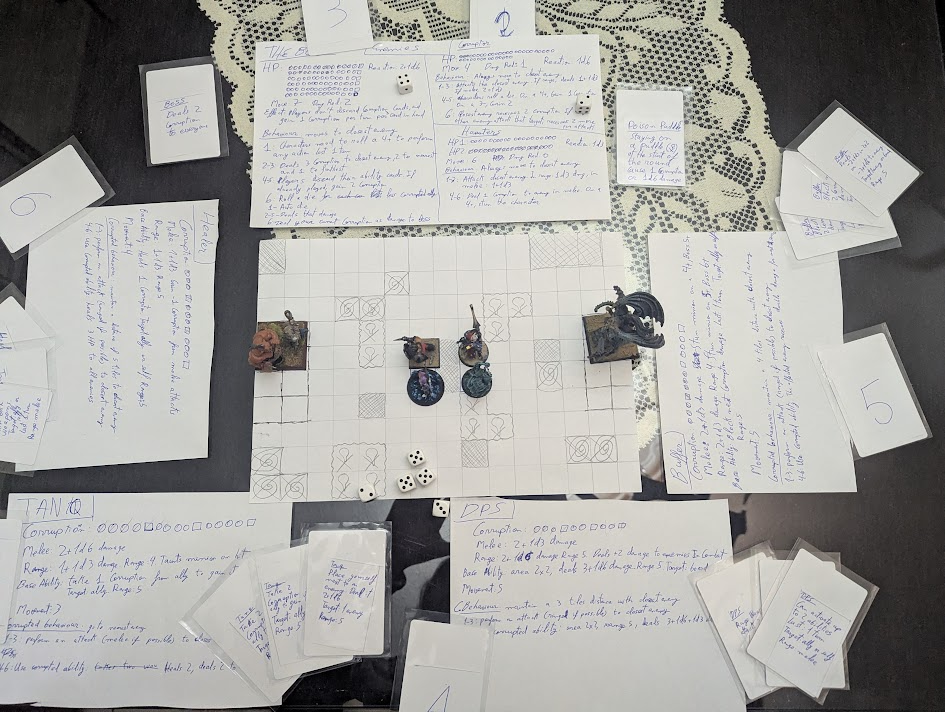
Paper Prototype
Result: The original game had the issue of random turns and it was too easy to die in the first rounds.
Goal: first time testing the balancing and general flow of the game to check if the game core was fun to play.
Solution:
Change the turns to a fixed turn order so synergies and strategies were easier to perform.
Change the original Corruption and Life as one to different systems, so it was easier to survive.
Redefine the roles to make them more interesting to play and with more weight in the game.
Increased the size of the map so players won’t feel overwhelmed too soon.
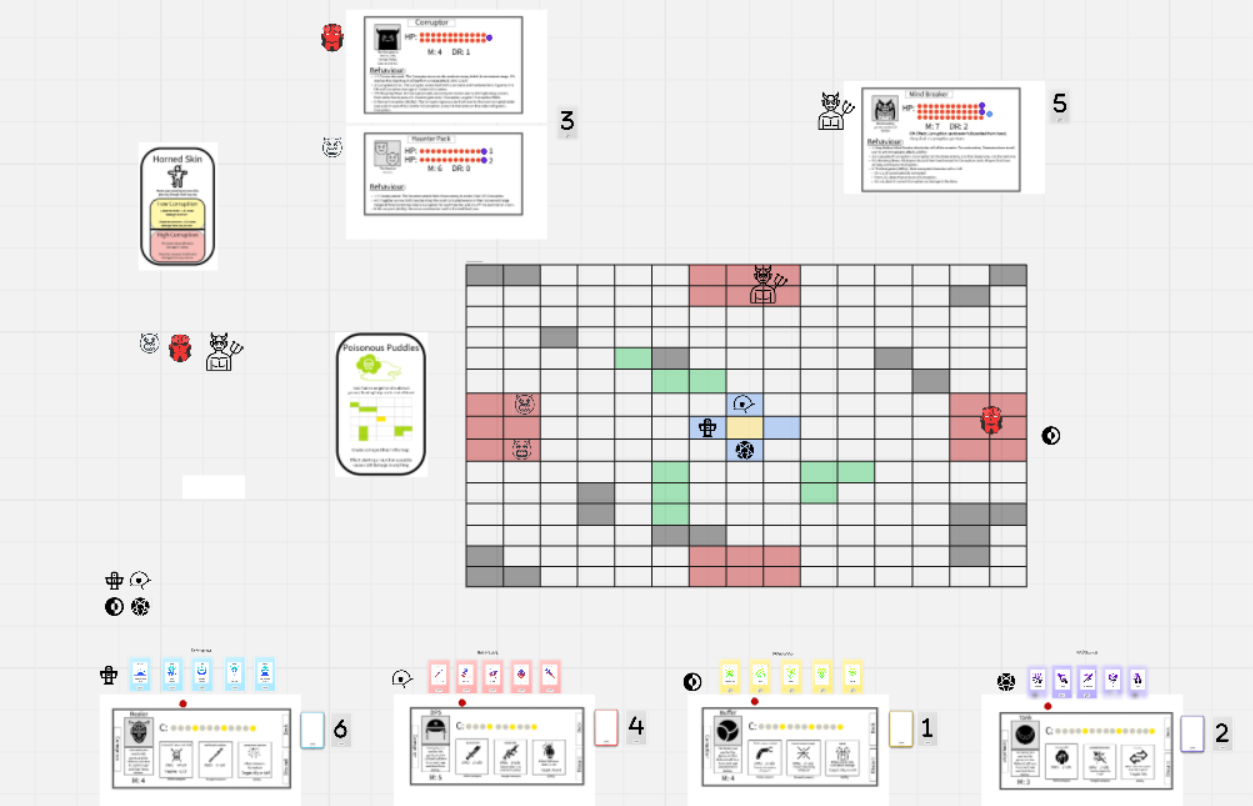
Rapid Prototype Highlight #1
Result: First Miro prototype had the issue of being too chaotic to play and enemies were to easy to avoid.
Goal: testing the changes from the paper prototypoe and find a good balance between strategy and challenge.
Solution:
Change the turns to a specific order to follow so it becomes easier to play.
Change the position of enemies and characters adn add some extra elements of terrain to make it harder to run away.
Add new mechanics to each role to increase the synergy between characters.
Reduce enemies’ endurance but increase their attacking power.
Rapid Prototype Highlight #2
Result: Game became better but it hasn’t showed its full potential. Still some confusing points were noticeable.
Goal: Refine and polish the details of the game to make it more fluid and enjoyable.
Solution:
Eliminate the base behaviour of enemies and increase the options to stop them.
Facilitate a quick guide of icons and elements of the game to quickly find them.
Redesign the Corruption system to make it more personal for each character and to improve the Risk-Reward base system.
4. The First Interactable
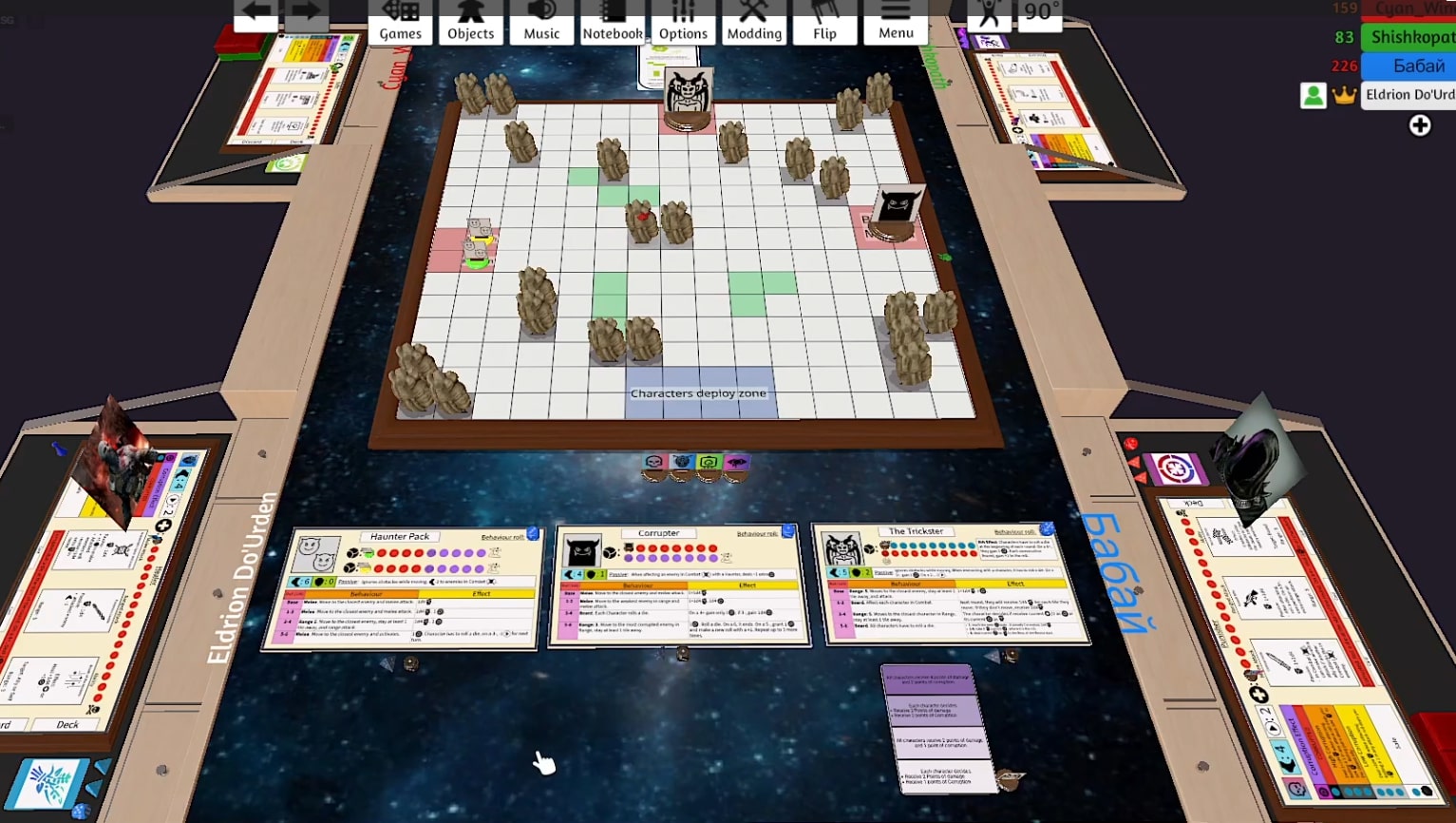
Result: Players decide their turn order, characters are better defined and they can interact with positioning and enemies behaviour.
Goal: Create the first playable prototype in Table-Top Simulator to play a full game session.
Implementation:
Mechanic Synergy 1: combining skills to perform combos – you can follow some specifics order of actions to obtain better results in the battle.
Mechanic Synergy 2: position in the map and adding better special tiles so playing against the enemies’ movement is also a strategy.
Narrative Synergy: Corruption gains more weight in the game, adding specific effects to each character as they get more corrupted, in exchange of some debuffs.
5: Playtest & Key Iterations
Playtest #1 Highlight
Game Board
Playtest Recording
Result: Players were very interested in the variety of characters and synergies between them to defeat the enemies.
Feedback & Problem: Players were confused about how to perform the turn actions and the goal seemed too easy to reach.
Solutions: I added a turn management system of action points and balanced the map to make the challenge more difficult to beat.
Playtest #2 Highlight
Game Board
Playtest Recording
Result: Players discovered how to perform together the rounds and create powerful tactics against the enemies. They see the potential of replayability.
Feedback & Problem: They found confusing some wordings and how the amount of information was given to them.
Solutions: I improved the wording, added a reference table easier to follow and simplified some concepts of the game in the rules.
Playtest #3 Highlight
Game Board
Playtest Recording
Result: Fixed turn order and the limited actions caught their attention the most, making them getting more and more involved in the game. Also immortal enemies were interesting.
Feedback & Problem: The rules were a bit confusing in some parts and easy to get lost due to lack of examples.
Solutions: Improving the quick rules and adding some examples and references to guide players, also adding more Q&A facts to help in the most confusing points.
6. Finished Game
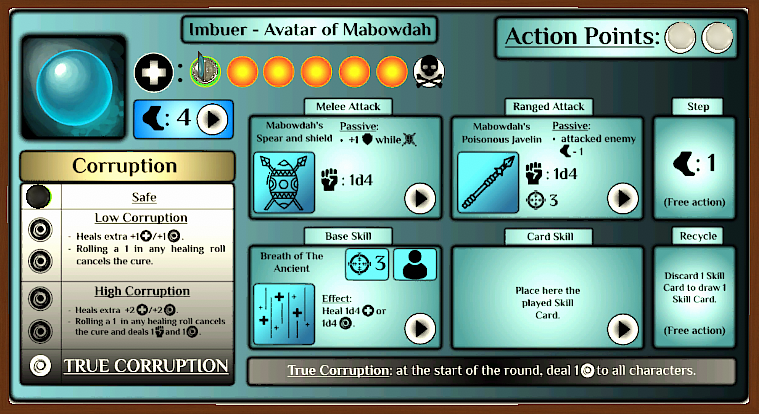
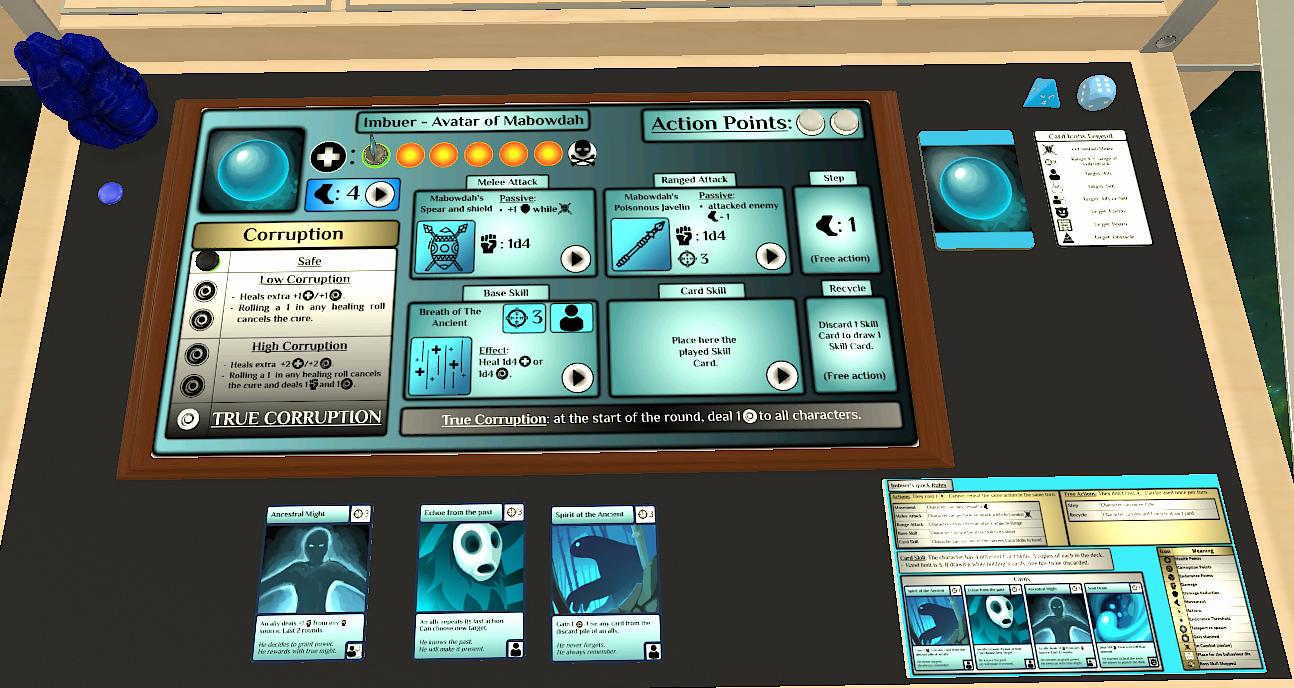
Character Board
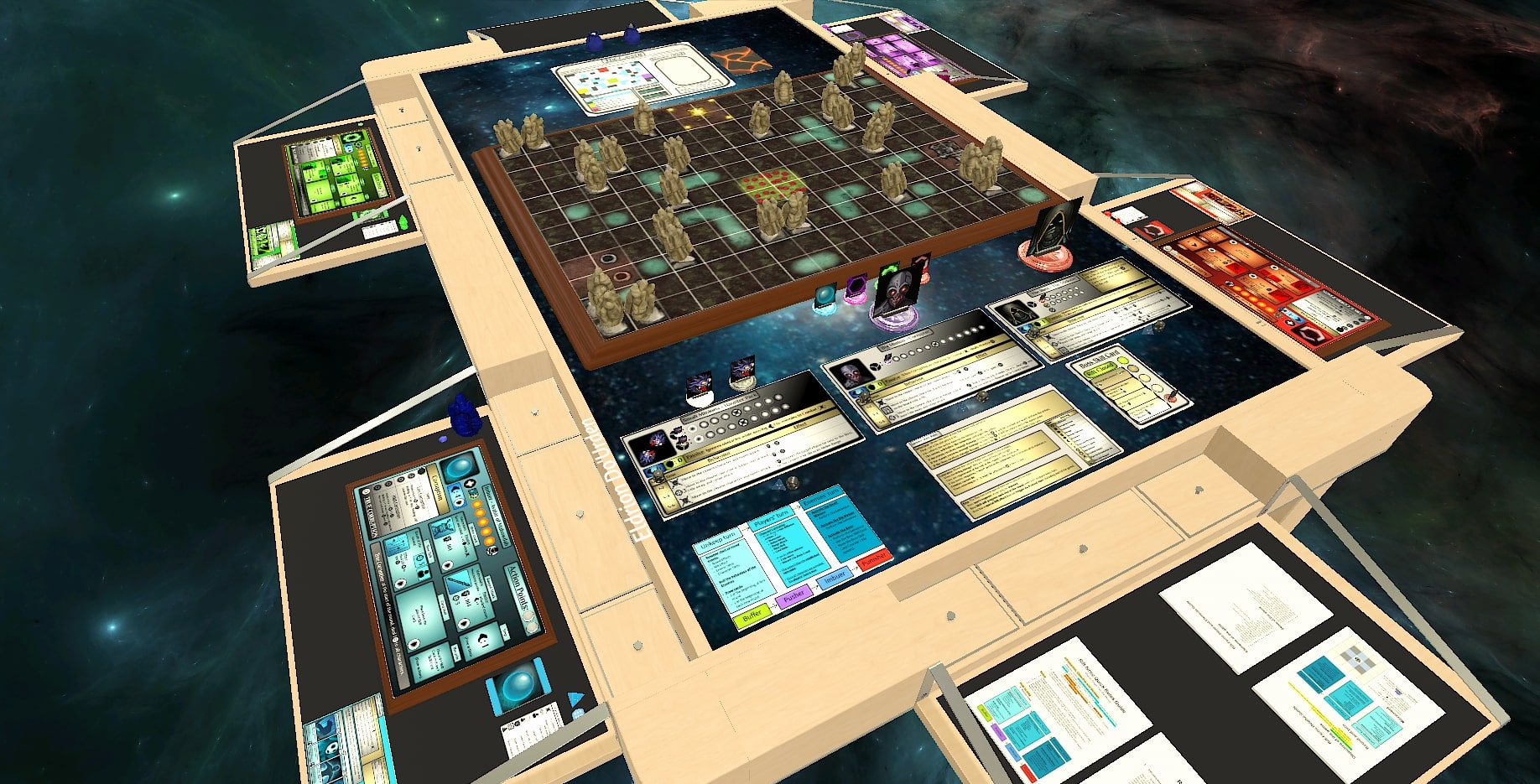
Full Board
Results:Made a playable game on Tabletop Simulator.
Goal:Create a challenging survival action RPG with cooperative mechanics and tense moments, for Tabletop Simulator.
Execution:
Risk-Reward System: Created a Corruption mechanic with beneficts for players in exchange of penalties, related with the main theme of the game.
Fixed turns with limited actions: Two actions per turn in a round where each character has its turn already determined, all prepared to create a plan against the enemies.
Each point counts: A system based on D4 dice and with low numbers for damage and life ends up with situations where a 1 can make the difference.
Live Improvements
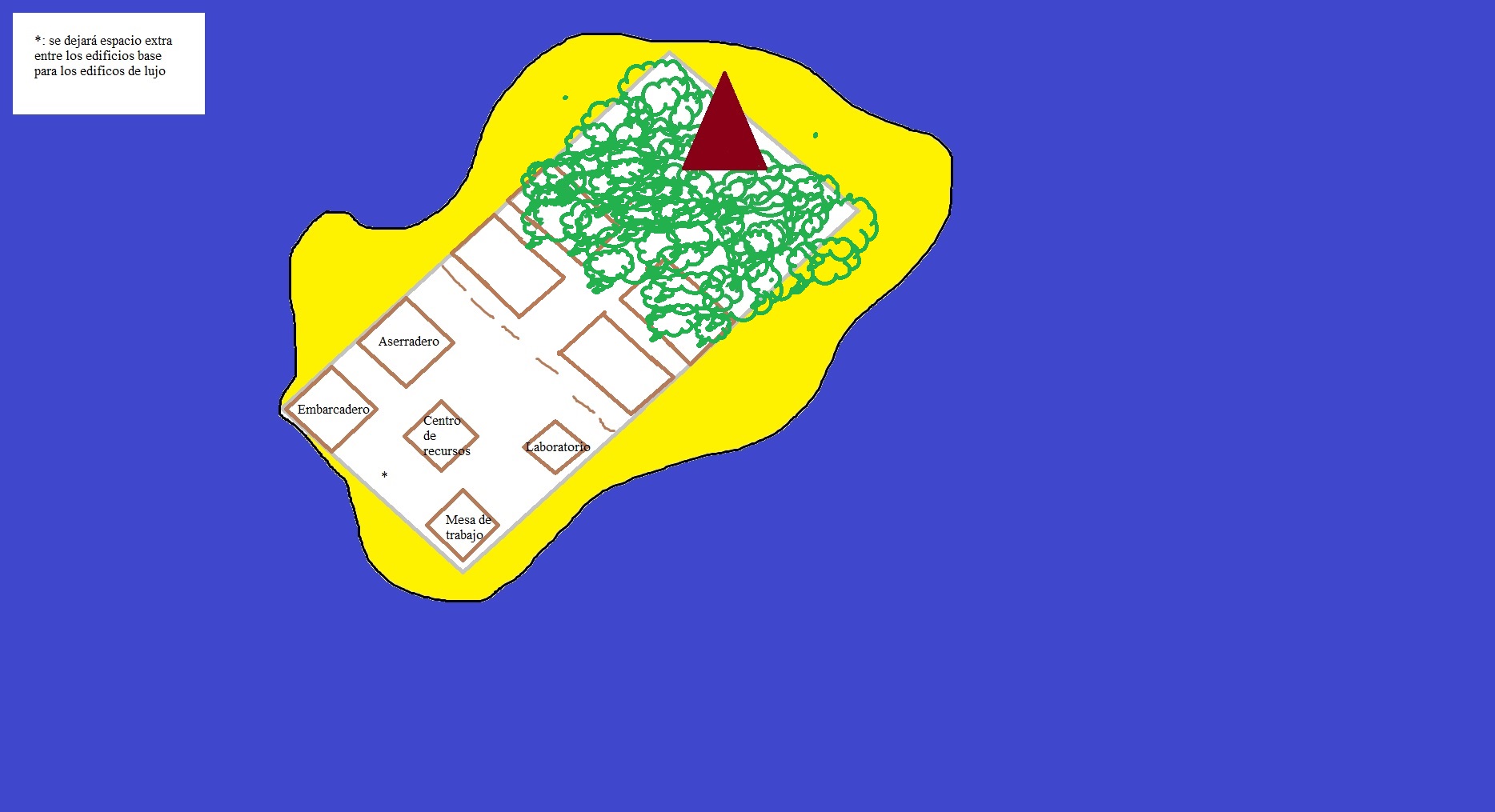
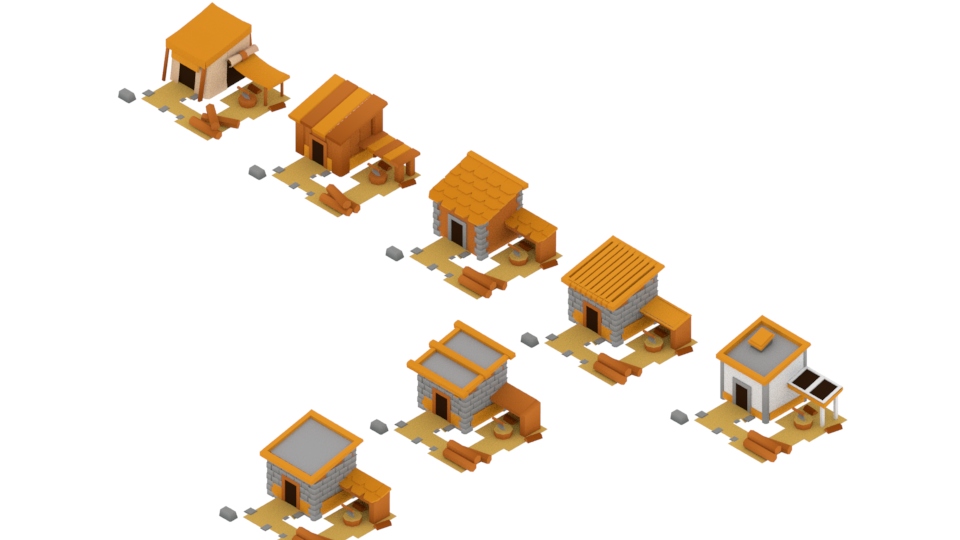
Luxury Buildings
Result: The original game had the issue of random turns and it was too easy to die in the first rounds.
Goal: first time testing the balancing and general flow of the game to check if the game core was fun to play.
Solution:
Change the turns to a fixed turn order so synergies and strategies were easier to perform.
Change the original Corruption and Life as one to different systems, so it was easier to survive.
Redefine the roles to make them more interesting to play and with more weight in the game.
Increased the size of the map so players won’t feel overwhelmed too soon.
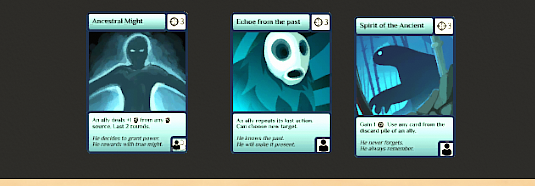
Card system
Result: First Miro prototype had the issue of being too chaotic to play and enemies were to easy to avoid.
Goal: testing the changes from the paper prototypoe and find a good balance between strategy and challenge.
Solution:
Change the turns to a specific order to follow so it becomes easier to play.
Change the position of enemies and characters adn add some extra elements of terrain to make it harder to run away.
Add new mechanics to each role to increase the synergy between characters.
Reduce enemies’ endurance but increase their attacking power.
Expeditions
Result: Game became better but it hasn’t showed its full potential. Still some confusing points were noticeable.
Goal: Refine and polish the details of the game to make it more fluid and enjoyable.
Solution:
Eliminate the base behaviour of enemies and increase the options to stop them.
Facilitate a quick guide of icons and elements of the game to quickly find them.
Redesign the Corruption system to make it more personal for each character and to improve the Risk-Reward base system.