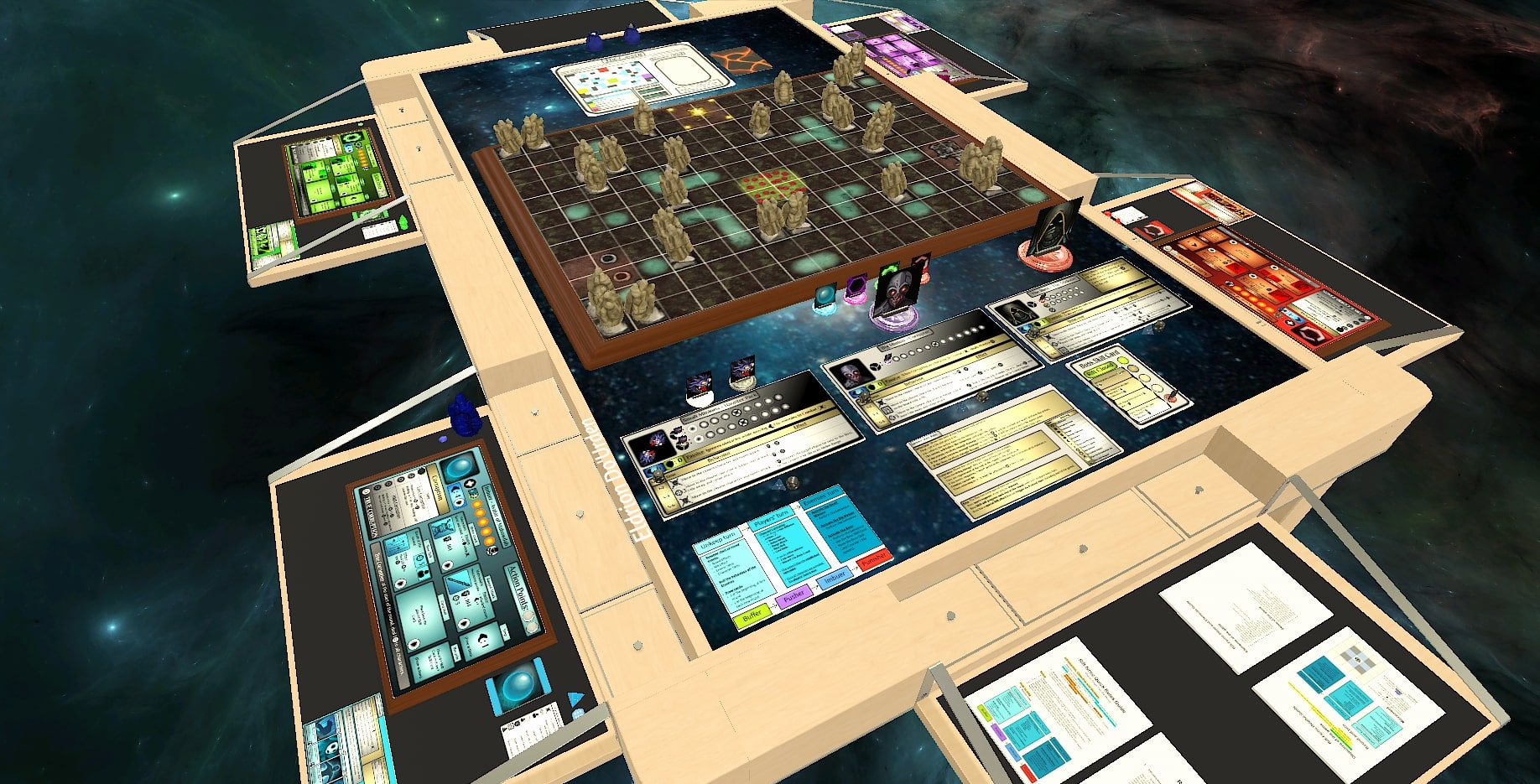
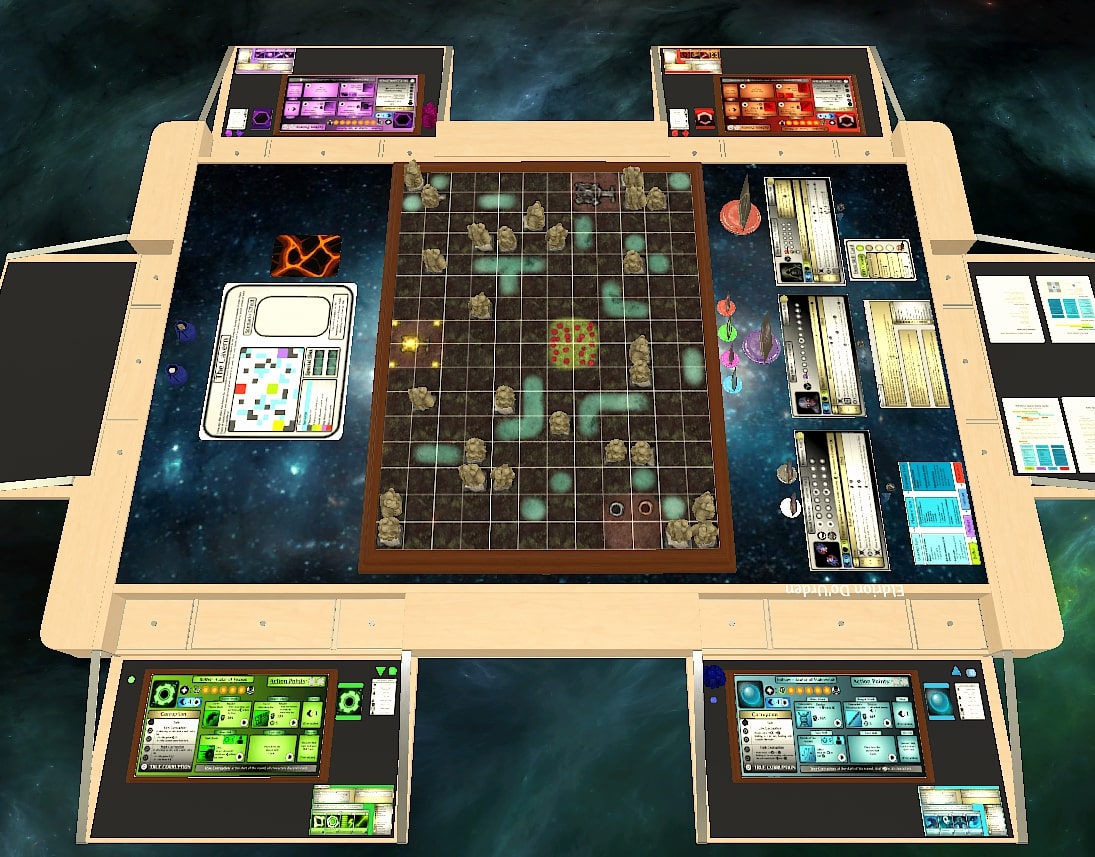
The main idea of making Rift-ferno was to subvert players’ expectation of a Dungeon Crawler by turning it into a survival game:
Co-op genre – playing all together against the system is, for me, the best way to play a Co-op tabletop game.
You fight to survive – enemies are immortal, so you fight to keep the party alive and make it to the last round.
Mix of themes – Fantasy, Scy-Fy and Present are combined in a corruption-themed universe.
Being guided by the mentor Jeremiah Franczyk (Lord of the Rings Online), and being supported by my classmates, helped me to refine my idea and reach the perfect point of tension and risk-reward mechanics.
Overview & Technique Highlights
Game Premise: the Universe is being Corrupted by None, and entity which purpose is to revert all matter and energy into its primordial form. As the last resort of reality, you fight to survive one more day, closing the Rifts None creates.
Cooperating between four avatars, players have to survive during four rounds against the threat of immortal enemies, avoiding both corruption and death, to reach the fifth round so the portal will close and victory is achieved.
Technique Highlight 1: Risk-Reward System
Visualization of Mechanic
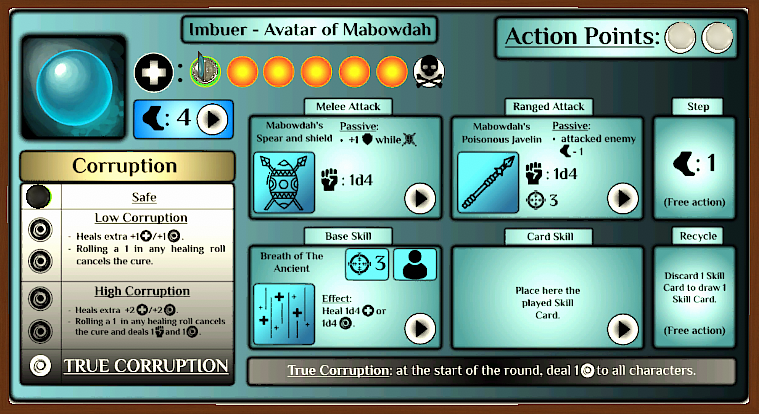
Goal: I wanted to create a system where players will receive beneficts based on taking some risks for their characters.
Result: A corruption system that grants each character unique beneficts with related handicaps and some decision makings during the game.
Techniques
With a Risk-Reward system, players can play more aggresively or take more risks in order to push their luck and obtain beneficts.
In a dice-based gameplay, using D4s and taking the 1 as the bad result, the chances to received the bad effect aren’t that low.
The more Corruption players obtain, the higher the reward, but also the handicap. It will condition their plans each round.
Technique Highlight 2: Immortal enemies
Visualization of Mechanic
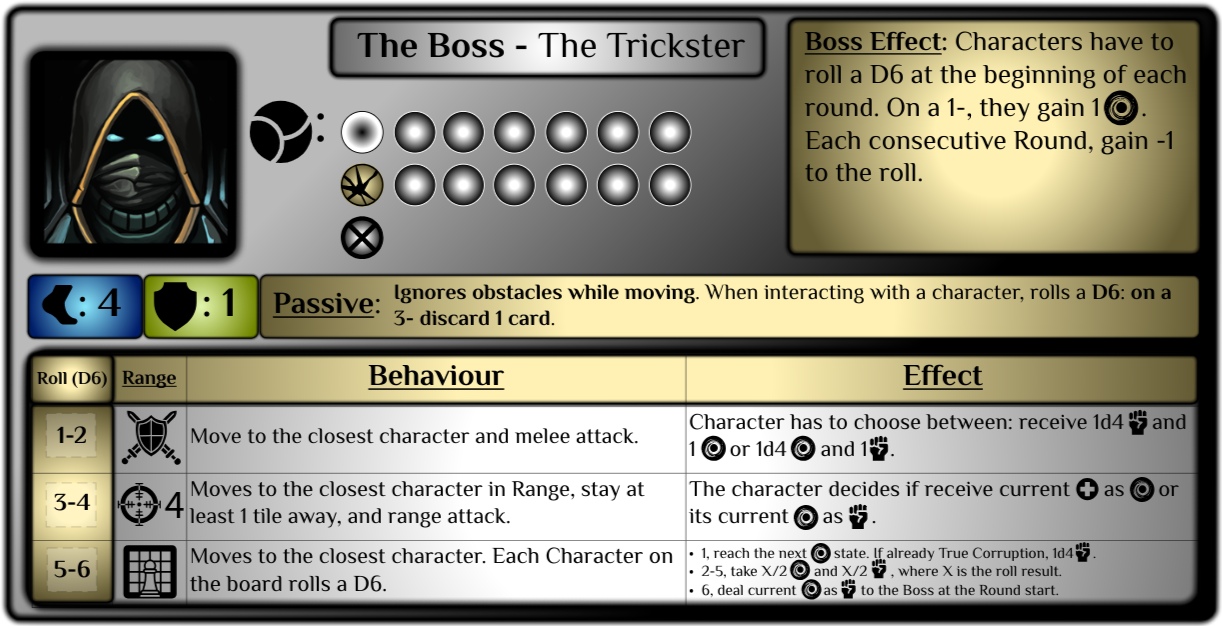
Goal: To achieve a more intense survival expeerience in the dungeon crawling type game, I decided that killing enemies wasn’t an option.
Result: Enemies can be stunned or even respawned, but since there are some of them it’s not possible to stop them all so players have to decide which risk they’ll take.
Techniques
Enemies have a different type of life points, the endurance points, so it won’t be confused with general life points.
Enemies will regenerate each round, so it’s important to decide how much damage players will manage for each one.
The Boss cannot respawn, but it has also a Special Skill that can be stopped by dealing it ddamage. It’s a powerful one, so it turns a priority to consider
Technique Highlight 3: Synergies of characters
Visualization of Mechanic
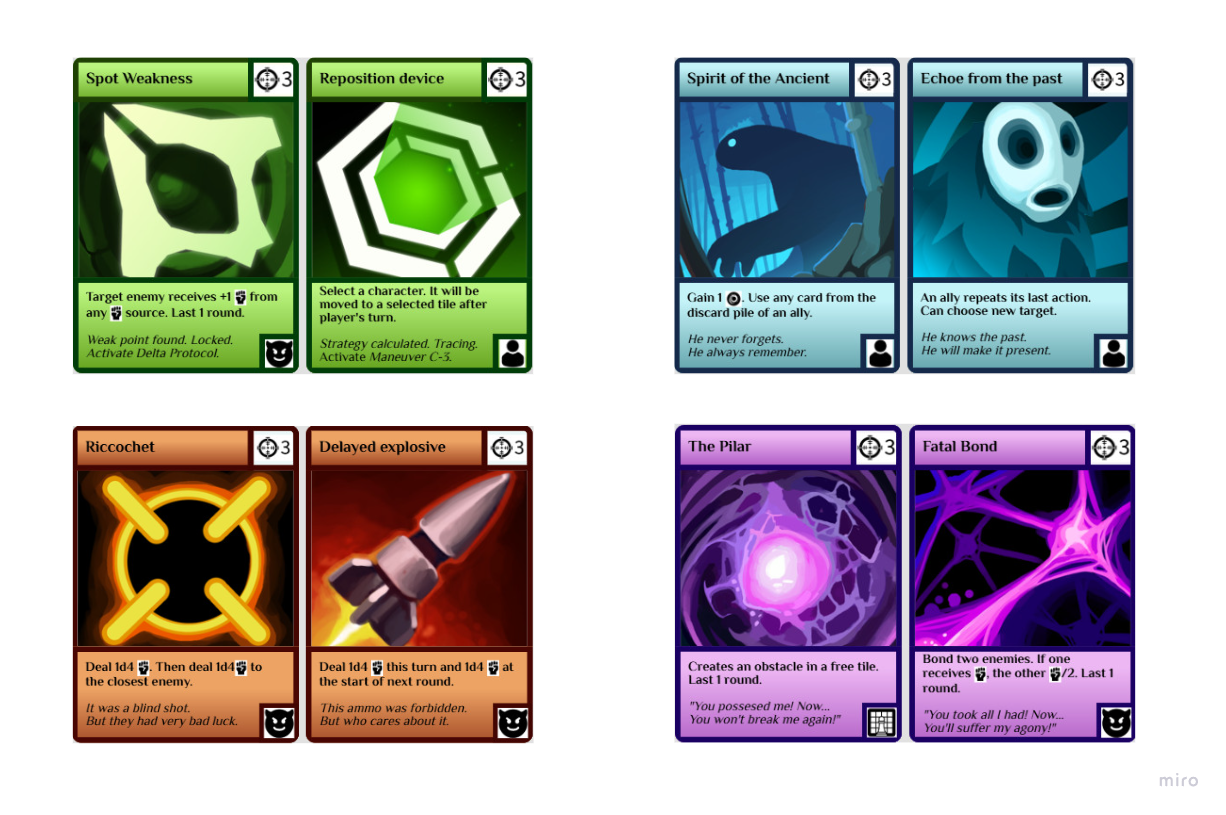
Goal: As a cooperative game, players should be able to coordinate in order to create the best possible combos to survive the encounter.
Result: Each character has a unique Skill set that can be combined with the rest of the party to obtain different solutions for each round.
Techniques
With fixed turns for each role, players will decide which strategy they will follow to overcome each round.
Each role has a main function, but they’re not limited by it. Different strategies will need some characters to play with a different approach.
With a limitation of 2 actions per turn,synergies are mandatory to find the best way of surviving each round.
Process Breakdown
1. Research, Ideation & Planning
The aim of my game’s idea is to twist the basic concept of a dungeon crawler board game. Instead of being a powerful group of raiders fighting untill you defeat the boss, here is just the opposite. You jave to survive while fighting an inmortal foe, where time is your ally but your chances are low.
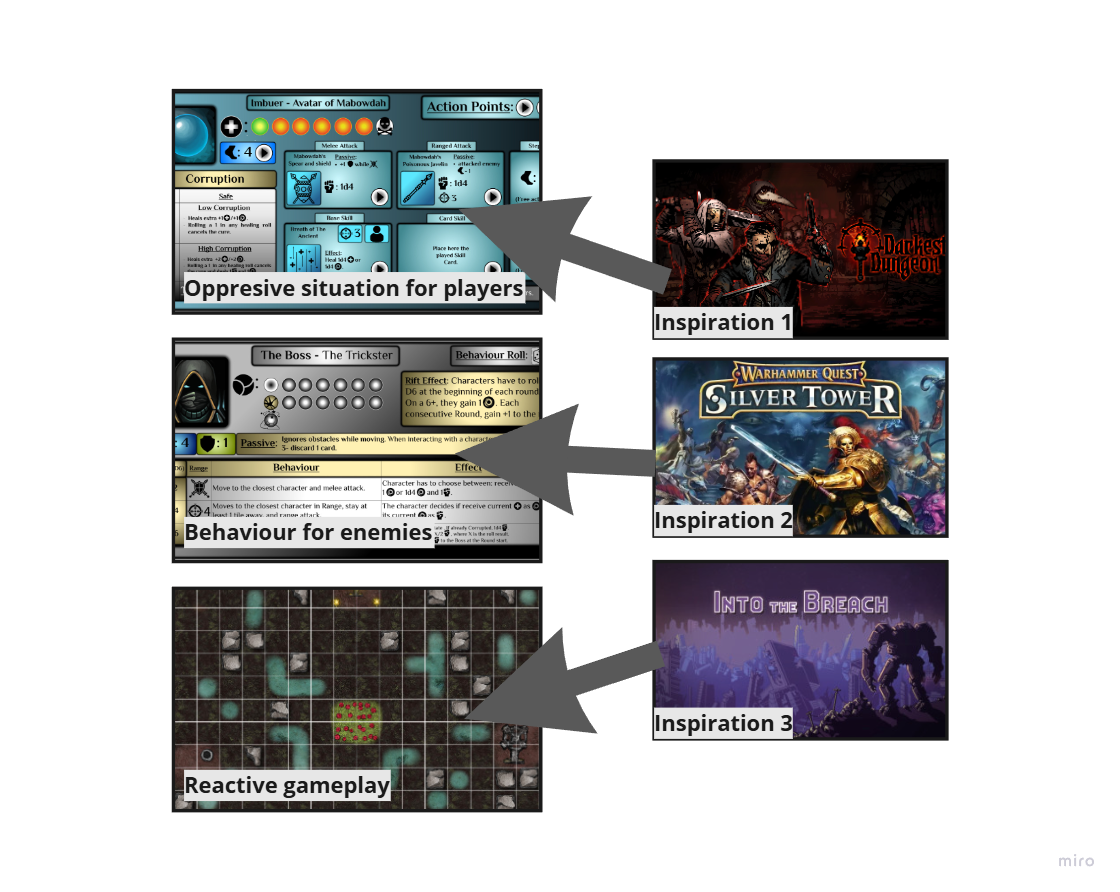
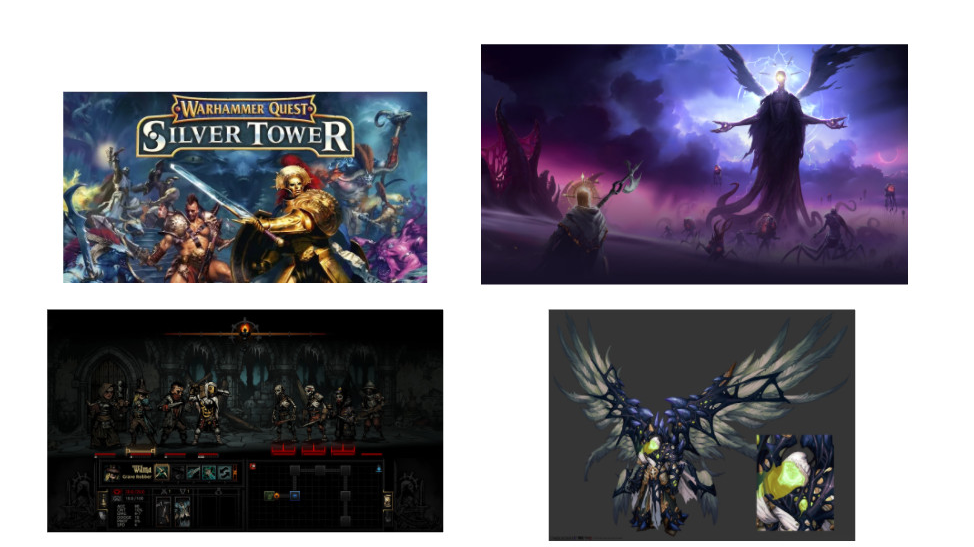
Analyzing Games: board control and use of the level like Into the Breach, enemies’ behaviour from Slay the Spire and life/stress system from Darkest Dungeon.
Ideating mechanics: I want to use the knowledge of the enemies’ behaviour to play around it, with a card system based on synergize between the team’s members. The aim is to create a puzzle to solve each round and tools to manage it.
Resonant theming: fight against the corruption of a god-like being who aims to unthread the fabric of reality, but you are an avatar of a godly Designer. Good resonance with the mechanics, a lot of piggyback.
2: Design Document - Rulebook
Premise: to make Rift-ferno the intense but paced game I want to, I designed the main mechanics to fit based on the theme. This included:
Turn-based rounds with role-fixed order.
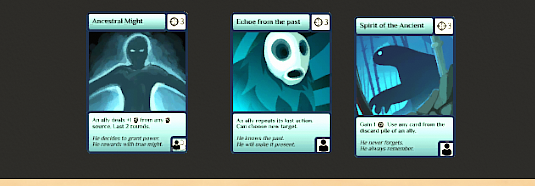
Skill system to define each role and grant them specific utilities.
Immortal enemies with rolled-base behaviours, controlled by the system.
Limited amount of rounds to survive until the end of the session.
Theme: I wanted to find a theme that allows me to mix Fantasy with Science Fiction, so I came up with the idea of different dimensions inside the same Universe, changing the concept of dimensions for the game. To fit into the theme with the mechanics, and finding the feeling of vulnerability, I designed the immortal enemies and the Corruption of the players, so the objective of “defeating the enemy foes” wasn’t an option and survival turned into the main plot.
3. Prototyping
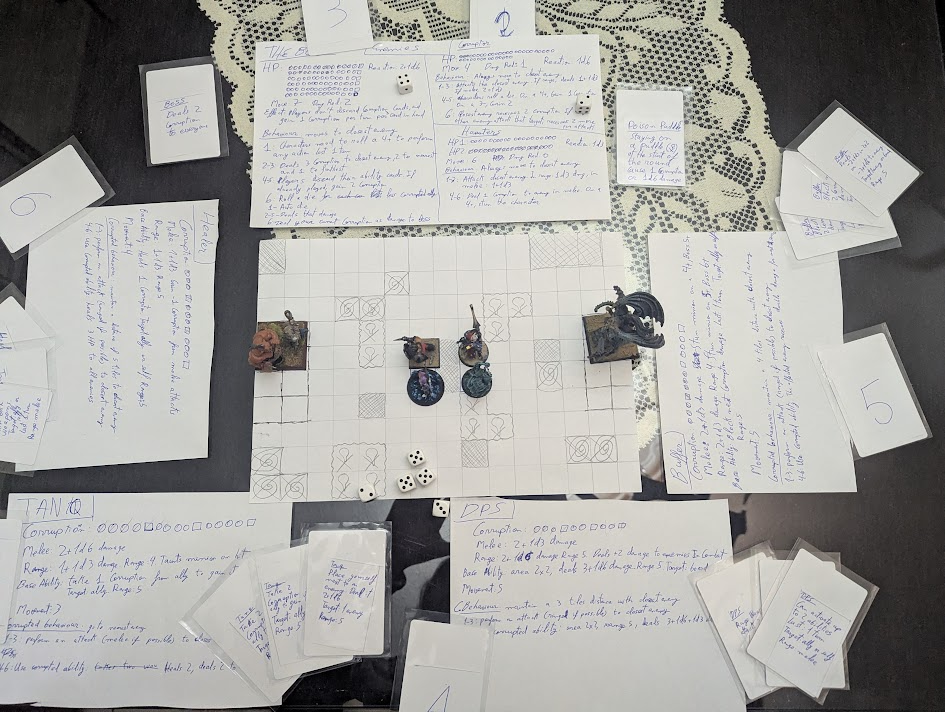
Paper Prototype
Result: The original game had the issue of random turns and it was too easy to die in the first rounds.
Goal: first time testing the balancing and general flow of the game to check if the game core was fun to play.
Solution:
Change the turns to a fixed turn order so synergies and strategies were easier to perform.
Change the original Corruption and Life as one to different systems, so it was easier to survive.
Redefine the roles to make them more interesting to play and with more weight in the game.
Increased the size of the map so players won’t feel overwhelmed too soon.
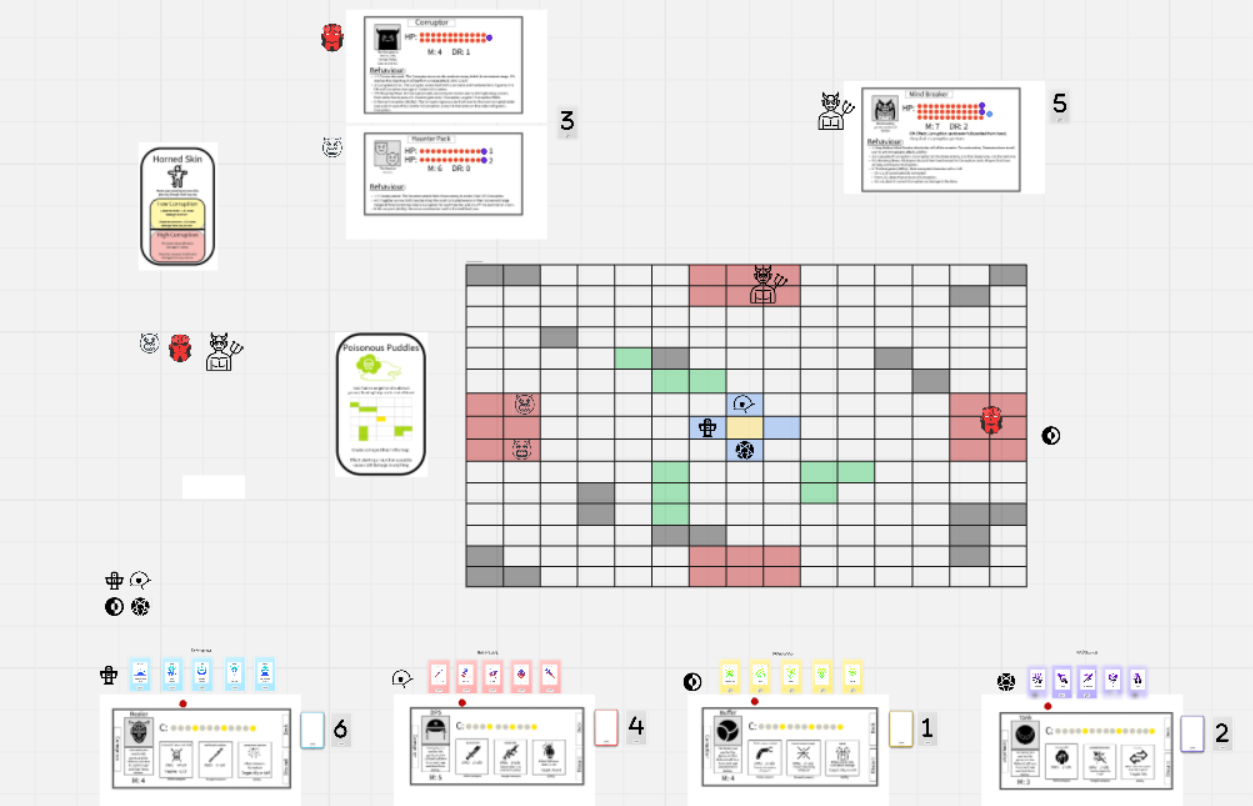
Rapid Prototype Highlight #1
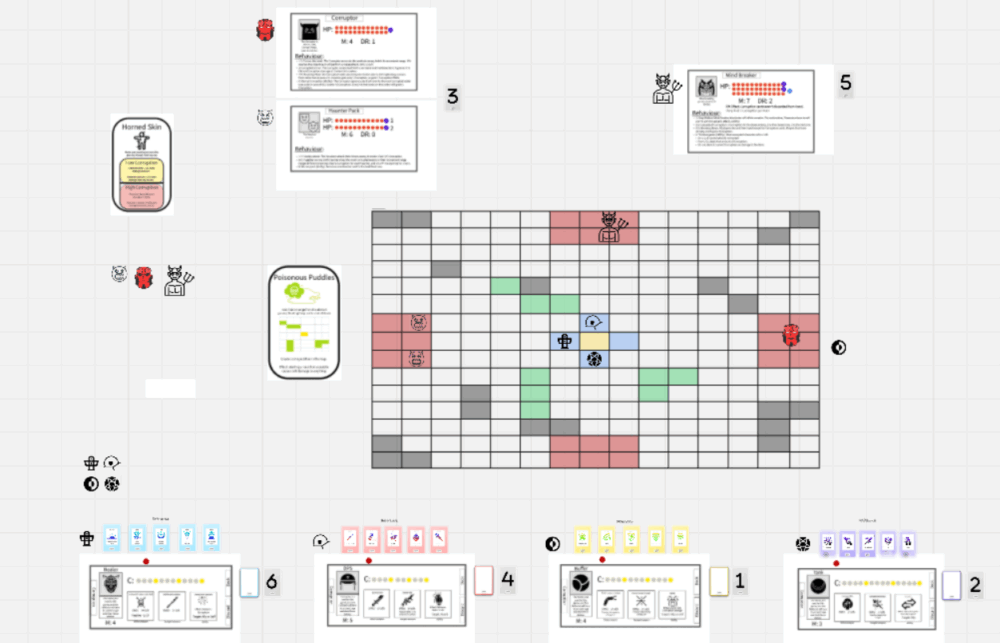
Result: First Miro prototype had the issue of being too chaotic to play and enemies were to easy to avoid.
Goal: testing the changes from the paper prototypoe and find a good balance between strategy and challenge.
Solution:
Change the turns to a specific order to follow so it becomes easier to play.
Change the position of enemies and characters adn add some extra elements of terrain to make it harder to run away.
Add new mechanics to each role to increase the synergy between characters.
Reduce enemies’ endurance but increase their attacking power.
Rapid Prototype Highlight #2
Result: Game became better but it hasn’t showed its full potential. Still some confusing points were noticeable.
Goal: Refine and polish the details of the game to make it more fluid and enjoyable.
Solution:
Eliminate the base behaviour of enemies and increase the options to stop them.
Facilitate a quick guide of icons and elements of the game to quickly find them.
Redesign the Corruption system to make it more personal for each character and to improve the Risk-Reward base system.
4. The First Interactable
Result: Players decide their turn order, characters are better defined and they can interact with positioning and enemies behaviour.
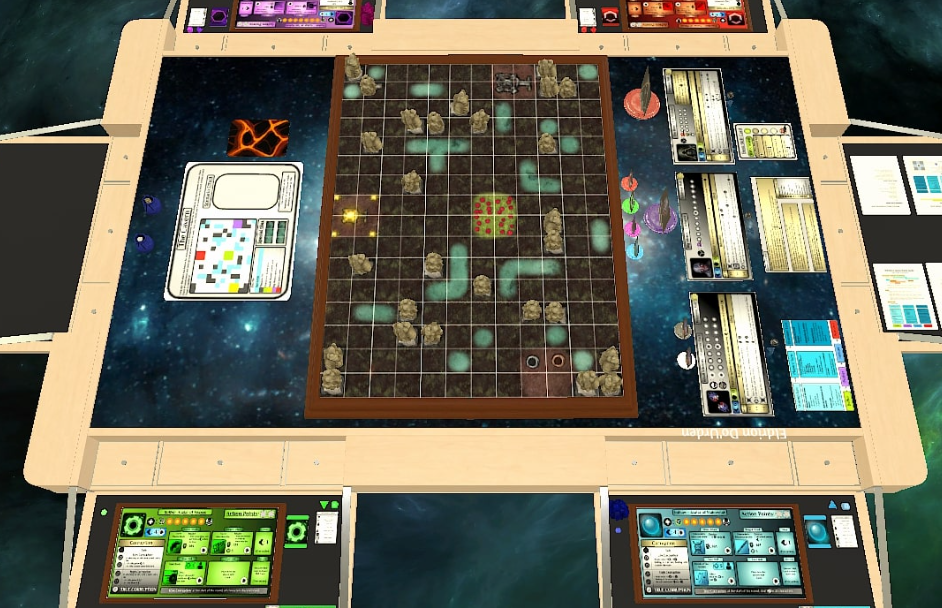
Goal: Create the first playable prototype in Table-Top Simulator to play a full game session.
Implementation:
Mechanic Synergy 1: combining skills to perform combos – you can follow some specifics order of actions to obtain better results in the battle.
Mechanic Synergy 2: position in the map and adding better special tiles so playing against the enemies’ movement is also a strategy.
Narrative Synergy: Corruption gains more weight in the game, adding specific effects to each character as they get more corrupted, in exchange of some debuffs.
5: Playtest & Key Iterations
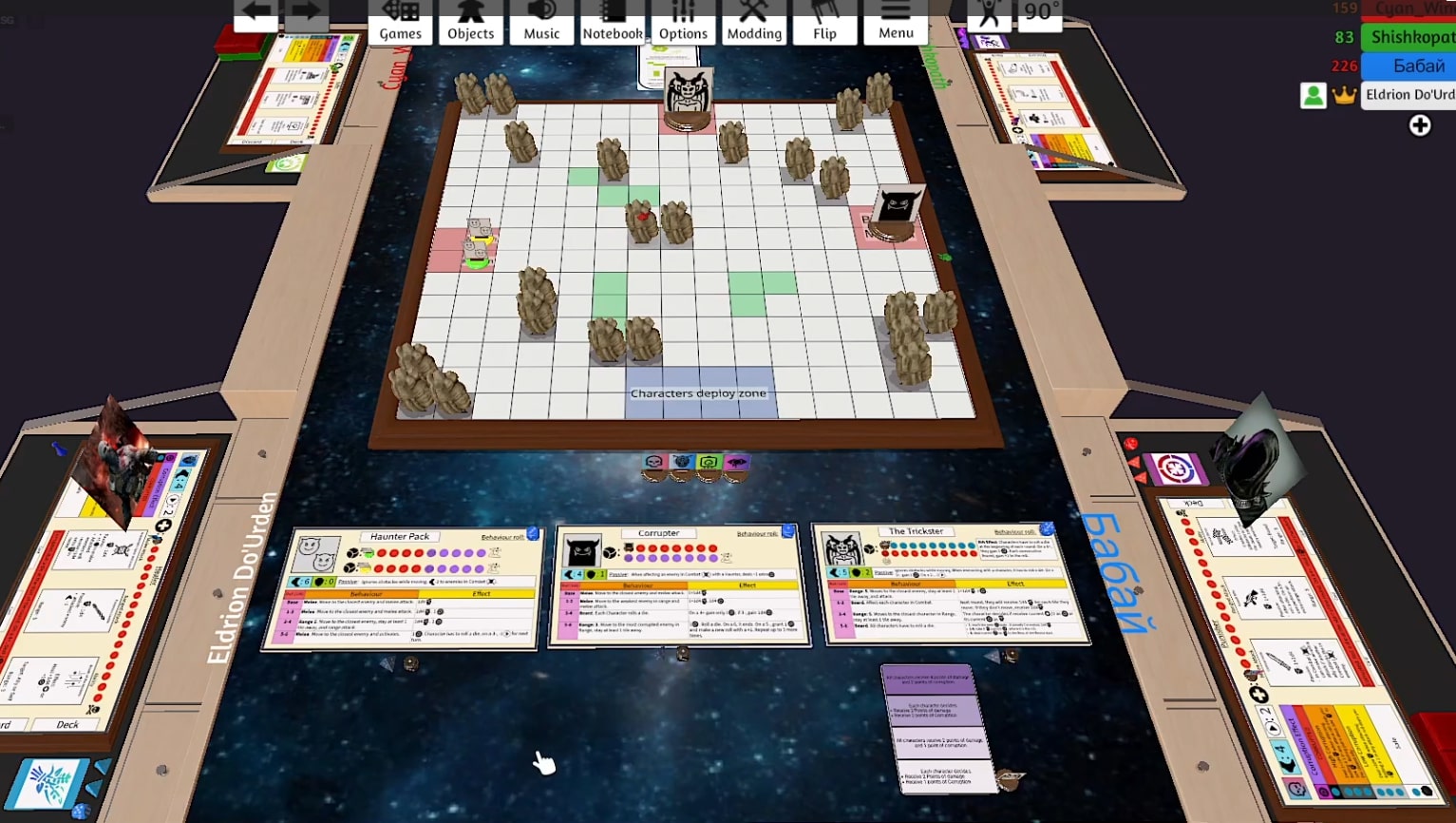
Playtest #1 Highlight
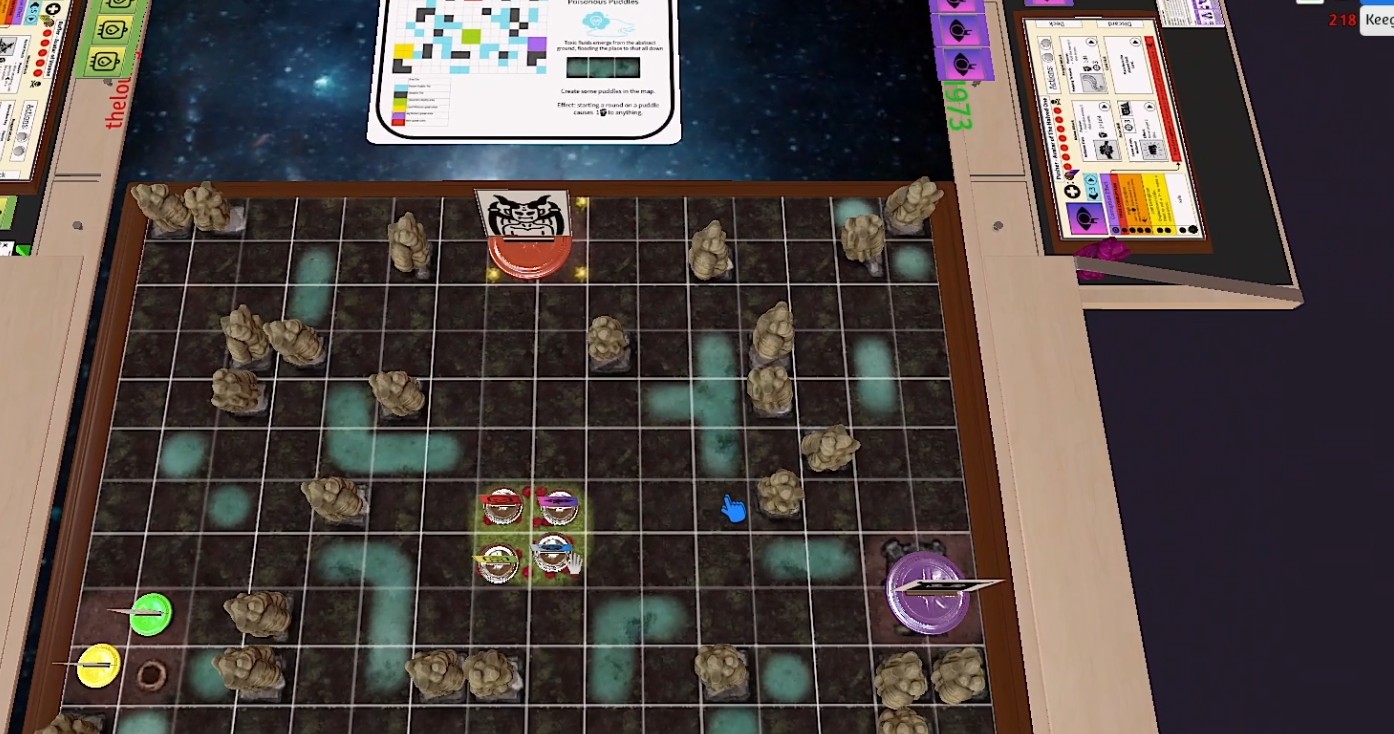
Game Board
Playtest Recording
Result: Players were very interested in the variety of characters and synergies between them to defeat the enemies.
Feedback & Problem: Players were confused about how to perform the turn actions and the goal seemed too easy to reach.
Solutions: I added a turn management system of action points and balanced the map to make the challenge more difficult to beat.
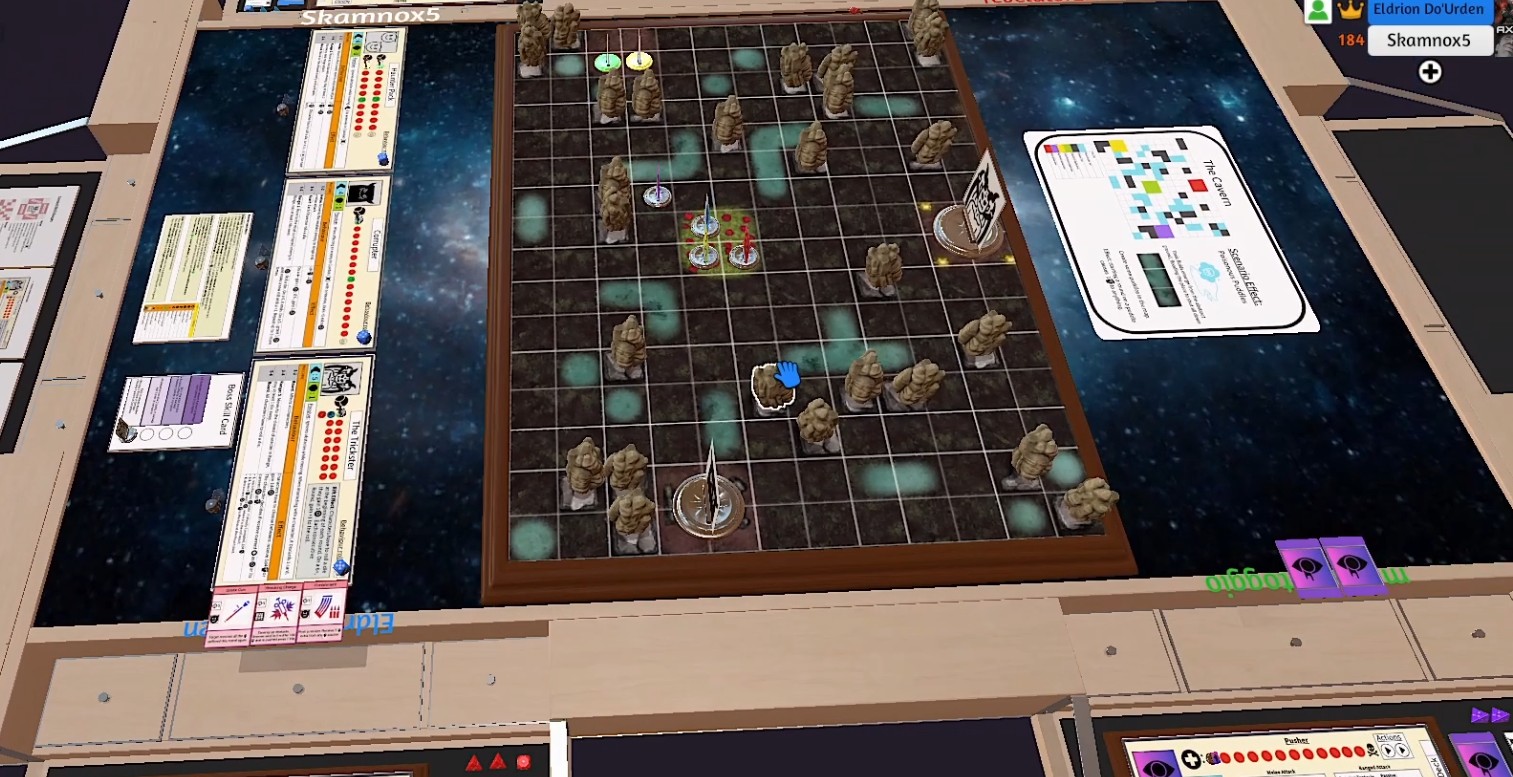
Playtest #2 Highlight
Game Board
Playtest Recording
Result: Players discovered how to perform together the rounds and create powerful tactics against the enemies. They see the potential of replayability.
Feedback & Problem: They found confusing some wordings and how the amount of information was given to them.
Solutions: I improved the wording, added a reference table easier to follow and simplified some concepts of the game in the rules.
Playtest #3 Highlight
Game Board
Playtest Recording
Result: Fixed turn order and the limited actions caught their attention the most, making them getting more and more involved in the game. Also immortal enemies were interesting.
Feedback & Problem: The rules were a bit confusing in some parts and easy to get lost due to lack of examples.
Solutions: Improving the quick rules and adding some examples and references to guide players, also adding more Q&A facts to help in the most confusing points.
6. Polished Portfolio Piece
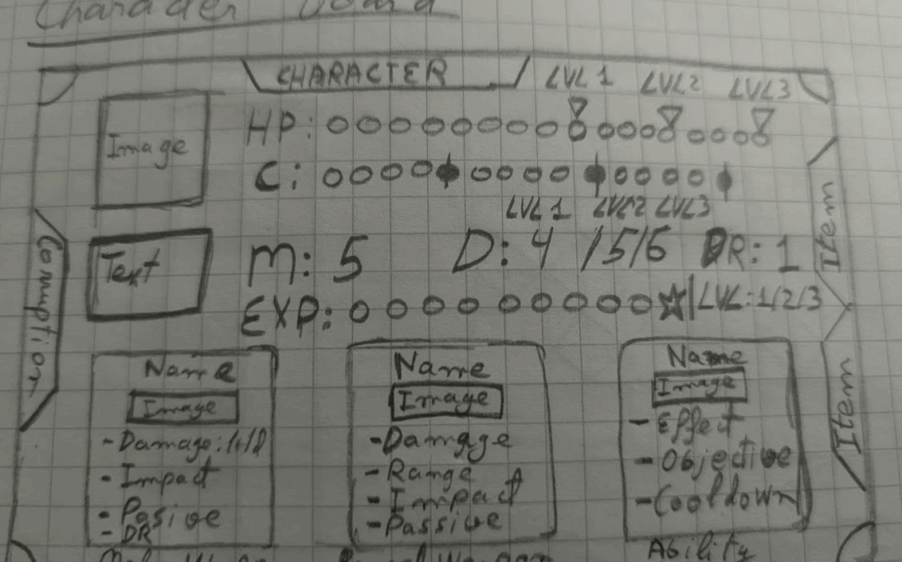
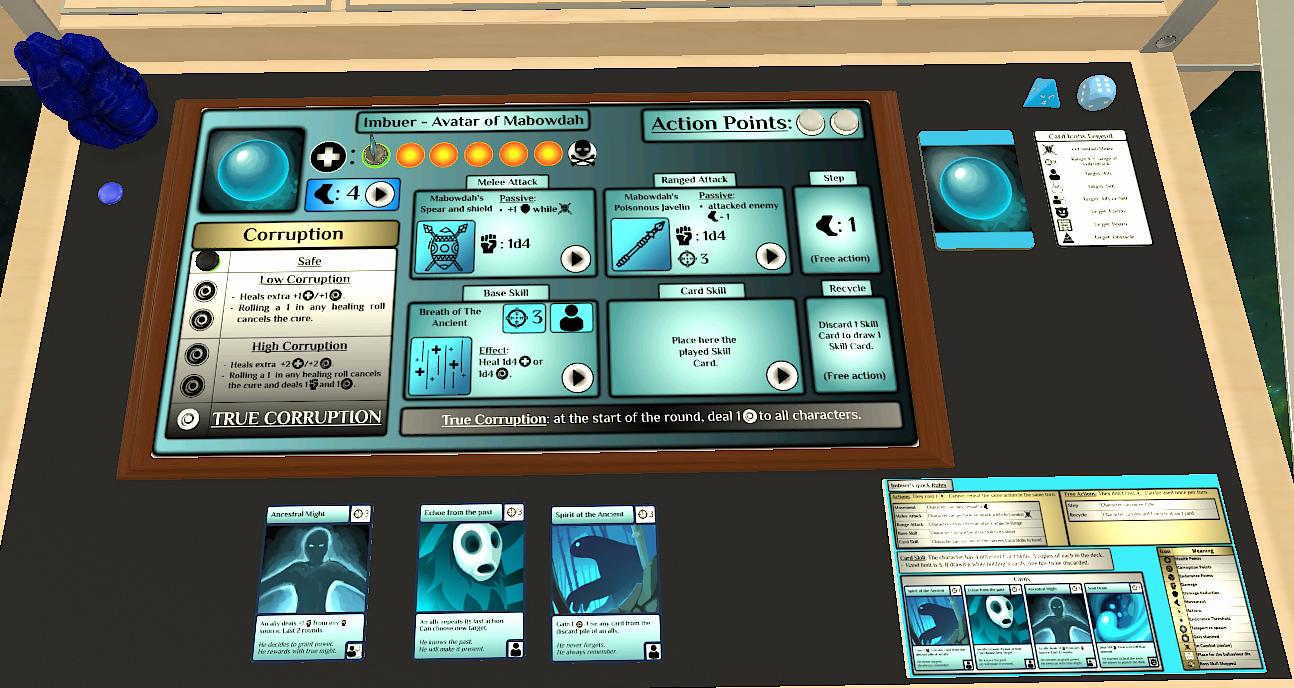
Character Board
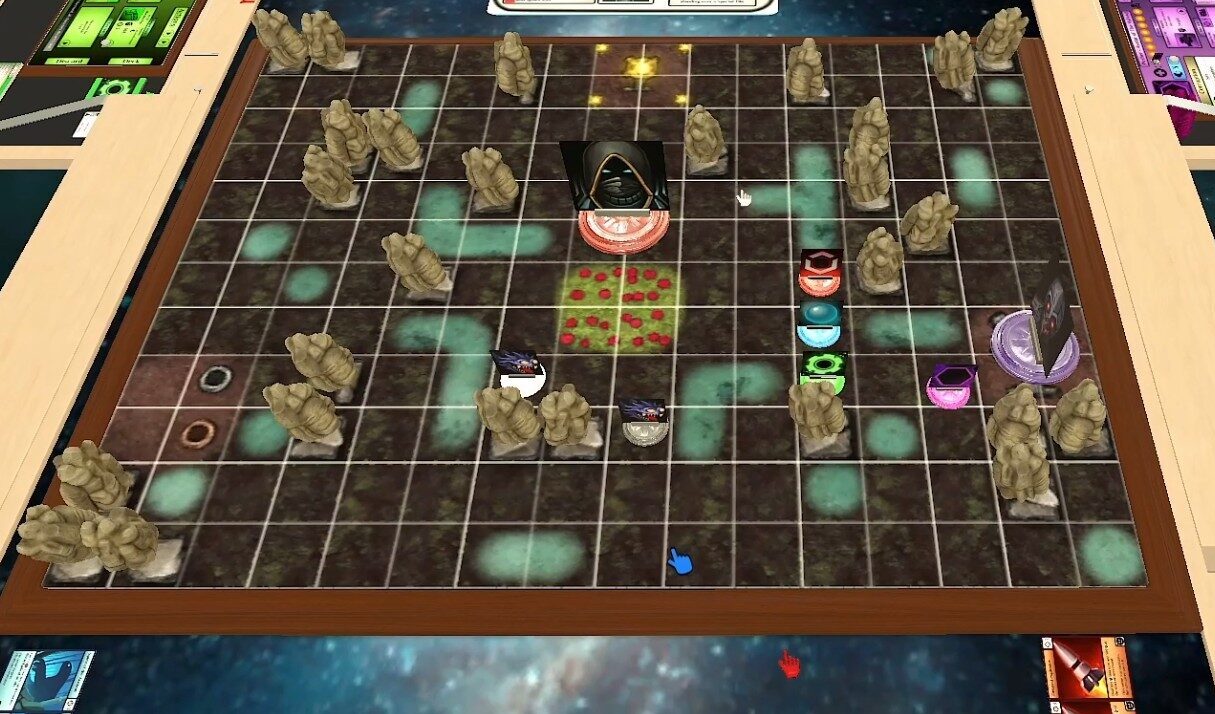
Full Board
Results:Made a playable game on Tabletop Simulator.
Goal:Create a challenging survival action RPG with cooperative mechanics and tense moments, for Tabletop Simulator.
Execution:
Risk-Reward System: Created a Corruption mechanic with beneficts for players in exchange of penalties, related with the main theme of the game.
Fixed turns with limited actions: Two actions per turn in a round where each character has its turn already determined, all prepared to create a plan against the enemies.
Each point counts: A system based on D4 dice and with low numbers for damage and life ends up with situations where a 1 can make the difference.